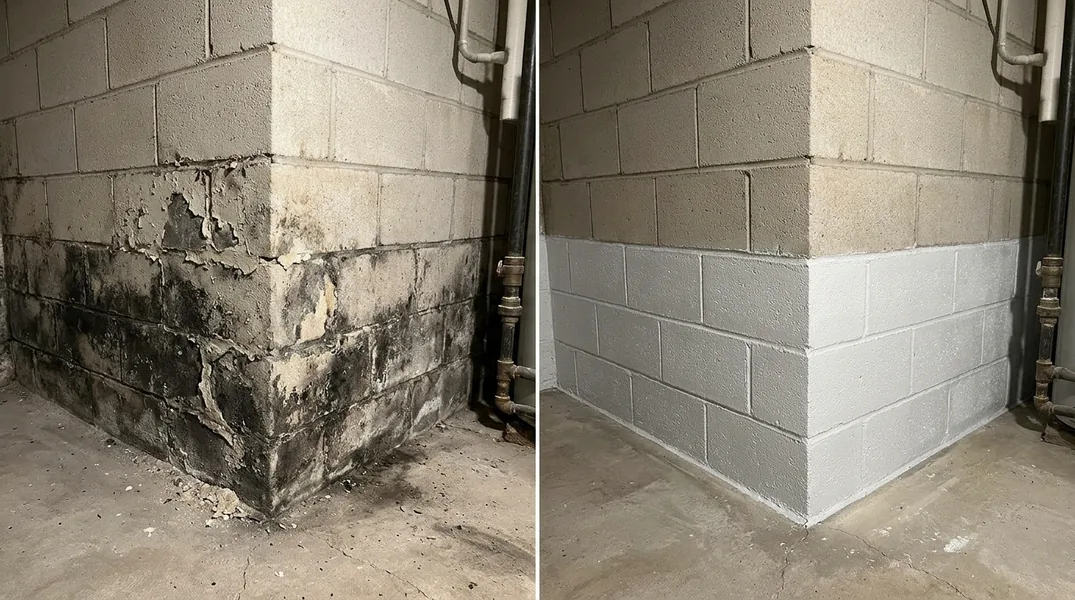
Why Arlington Heights Homeowners Face Basement Water Problems
Arlington Heights sits on the kind of soil that keeps basement waterproofing contractors busy. Much of the village was developed on clay-heavy glacial soils that drain slowly, and our freeze-thaw cycles put constant stress on foundation walls. Add in the occasional heavy spring rainstorm and the snowmelt that arrives every March, and you have the perfect recipe for a wet basement. If you have noticed dampness along the base of your walls, efflorescence (that white chalky powder), or a musty smell that never quite goes away, you are not alone. Many homes in Arlington Heights were built between the 1950s and 1980s, and their original drainage systems are simply past their useful life.
The good news is that water problems are solvable, and the solution almost always comes down to one big decision: interior vs exterior waterproofing. Both approaches keep water out of your living space, but they work in completely different ways and suit different situations. Understanding the tradeoffs before you call a contractor will help you ask better questions and avoid overspending on a system that does not match your home. At Basement Waterproofing, we walk homeowners through this exact comparison every week, so here is the honest version.
How Interior Drain Tile Systems Work
An Interior Drain Tile System is installed along the inside perimeter of your basement footing. The crew breaks up a strip of the concrete floor, digs a trench down to the footing, lays perforated pipe in gravel, and covers it with new concrete. Water that builds up under the floor or seeps through the wall base flows into the tile and is directed to a sump pit, where a pump lifts it out and away from the house. Because everything happens indoors, your yard, driveway, landscaping, and sidewalks stay untouched, which is a major advantage on tight suburban lots.
Interior systems are also easier to service and less expensive on average than digging up the exterior. They handle hydrostatic pressure from below the slab, which is the most common cause of water in older Arlington Heights basements. The main limitation is that they do not stop water from entering the wall itself, so if your block walls are actively weeping, you may also need wall sealing or a vapor barrier. A good contractor will assess your walls during the inspection and tell you whether drain tile alone is enough or whether Foundation Waterproofing measures should be added.
How Exterior Basement Waterproofing Works
Exterior Basement Waterproofing attacks the problem from the outside. The crew excavates down to the footing, cleans and repairs the foundation wall, applies a waterproof membrane or coating, installs exterior drain tile, and backfills with gravel and soil that shed water away from the house. This is the gold standard for stopping water before it ever touches your foundation, and it is often the right call for homes with visible wall cracks, bowing, or a history of repeated flooding.
The tradeoff is disruption and expense. Excavation means removing decks, patios, shrubs, and sometimes driveway sections, then restoring them afterward. On a typical Arlington Heights lot with mature landscaping and a narrow side yard, that can be a serious logistical challenge. Exterior work also costs more up front, and it is harder to inspect or repair later. Still, if your foundation walls are structurally compromised or the original exterior waterproofing has failed completely, an exterior membrane combined with drain tile is the most durable long-term fix. Many homeowners in neighboring Palatine and Mount Prospect face the same decision, and the answer depends on the condition of the walls, not on a one-size-fits-all rule.
Drain Tile vs Exterior Membrane: Which Fits Your Home?
The honest answer is that the right choice depends on where the water is coming from. If your basement is dry at the walls but the floor is damp or you get water during heavy rain, interior drain tile is usually the most cost-effective fix. If you can see water running down the inside of the walls, if there are horizontal cracks, or if the house has flooded repeatedly, exterior work is often necessary. Homes with finished basements and valuable flooring or drywall tend to benefit from a comprehensive approach that addresses both the wall and the floor. During a free estimate, we inspect the foundation, check the grading, test the sump system, and look for signs of hydrostatic pressure before recommending anything.
It is also worth knowing that the two systems are not mutually exclusive. Some homes need exterior membrane work on one wall and interior drain tile around the rest of the perimeter. Others do fine with interior tile plus crack injection and improved grading. A contractor who insists on only one method for every house is not really diagnosing your problem. Ask questions, get the scope in writing, and make sure the proposal explains why that method was chosen for your specific foundation.
Basement Waterproofing Cost in Arlington Heights: What to Budget
Cost is where the comparison gets real. Interior drain tile systems generally run less than full exterior excavation because there is no landscaping restoration and no heavy equipment tearing up the yard. Exterior membrane jobs cost more because of excavation, disposal, and restoration, and the final number depends on linear footage, depth, and how much concrete or decking has to be removed and rebuilt. Every basement is different, so any contractor who quotes a number over the phone without seeing the foundation is guessing. You can review typical ranges on our pricing page, but treat those figures as a starting point for a conversation, not a final bid.
Also factor in the long-term picture. A properly installed interior system with a quality sump pump and battery backup can protect a basement for decades with minimal maintenance. Exterior work is more permanent but harder to repair if something fails. Homeowners in Buffalo Grove and across the northwest suburbs often find that the best value comes from fixing the actual source of water rather than choosing the cheapest option. Ask about warranties, pump quality, and what happens if the system ever needs service.
Basement Waterproofing Near Me: When to Call a Pro
Some water issues are DIY-friendly: extending a downspout, regrading soil away from the foundation, or sealing a small crack with hydraulic cement. But persistent dampness, standing water, bowing walls, or a sump pump that runs constantly are signs of a bigger problem that needs professional diagnosis. Waiting usually makes things worse, especially in older Illinois basements where small cracks widen over winter and mold can take hold within days of a leak. If you are searching for basement waterproofing near me in Arlington Heights, look for a local company that inspects before it sells and explains the interior vs exterior tradeoff in plain language.
Arlington Heights Waterproofing serves homeowners throughout the area, and we are happy to take a look and give you a straight answer, even if that answer is that you only need a minor fix. Call (224) 427-5558 to schedule a free estimate, or reach out through the website. A dry basement is not a luxury in this climate, it is basic protection for your home and your family's health.
Looking for a professional basement waterproofing contractor in Arlington Heights? Arlington Heights Waterproofing responds fast for all your basement waterproofing needs.
Get a Free QuoteOur services: Basement Waterproofing · Interior Drain Tile System · Exterior Basement Waterproofing