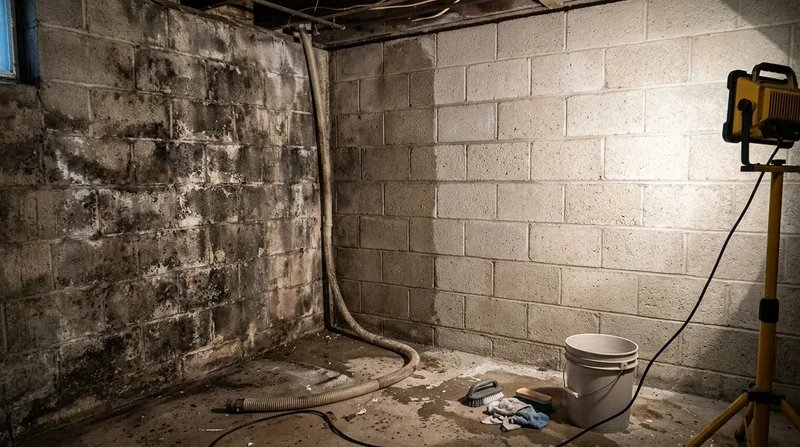




Basement Mold Remediation in Arlington Heights
When you search for Basement Mold Remediation in Arlington Heights, you are usually dealing with two problems at once: visible mold growth and the moisture source feeding it. Arlington Heights sits on flat glacial clay till northwest of Chicago, where dense soil drains slowly, the water table runs high in former prairie and wetland ground, and spring snowmelt plus heavy rain push hydrostatic pressure against brick, block, and poured-concrete foundations. We pair containment and treatment of affected surfaces with the drainage or humidity fix that stops the growth from returning. That means addressing the wet basement first, not just scrubbing the wall. If you want the underlying water problem solved, start with our basement waterproofing service and we will sort out the mold side in the same visit.
Why Mold Takes Hold in Arlington Heights Basements
The housing stock here sets up mold growth in predictable ways. Victorians and foursquares near downtown sit on old brick and block foundations with no modern drainage. Bungalows and Tudors in Scarsdale and Arlington Park have full basements that stay damp through humid summers. Post-war ranches in Mount Prospect and Palatine, plus 1980s and newer Colonials in Buffalo Grove and Schaumburg, all share the same glacial clay soil that holds water against the footing.
- Water seeps through foundation cracks and porous block, keeping wall cavities damp for weeks after a storm.
- Failed or missing drain tile lets the water table rise against the footing instead of carrying it to the sump basin.
- Clogged or short downspout extensions dump roof water right at the foundation line.
- Warm, humid summer air condenses on cool concrete walls and feeds surface mold.
- Old window wells without proper drainage collect water and wick it inward.
Each of these leaves the same signature: a musty basement smell, efflorescence on the block, and dark staining along the base of the wall where moisture lingers longest.
Key info: A bungalow near Recreation Park with a block foundation and a dead sump pump will grow mold on the lower wall within one humid Arlington Heights summer. Fixing the pump alone is not enough if the wall stayed wet for months.
For official guidance on mold and moisture in homes, the EPA mold resources are a solid reference, and we follow the same moisture-control logic on every job.
How We Remediate Mold and Fix the Moisture Source
Mold remediation only works if the water source is handled. We start with a full basement inspection to find where moisture is entering, then build a plan that treats the affected surfaces and corrects the drainage, humidity, or wall seepage driving the growth. This is a moisture and building-materials job from start to finish.
- We inspect the basement, check the sump basin and discharge line, and trace water entry points along the footing and wall joints.
- We set up containment so spores and dust stay in the work zone during removal.
- We remove or treat affected materials and clean the surfaces with appropriate products.
- We correct the moisture source, whether that means sealing wall seepage, repairing drain tile, or improving ventilation and dehumidification.
- We verify the space is dry and give you a clear maintenance plan for the humid months.
The result is a dry basement and a remediation plan built around the actual cause, not just the visible growth.
Key info: A split-level in Mount Prospect had mold along the base of a block wall after every spring thaw. We traced it to a cracked footing drain and a short downspout, repaired the drain, and extended the discharge away from the foundation. The wall stayed dry through the next rainy season.
When wall seepage is the driver, our basement wall sealing work often pairs with remediation to keep the surface dry going forward.
Remediation Approaches We Use in Arlington Heights
Not every mold job is the same, and the right approach depends on how wet the basement gets and how long the moisture has been there. Here is how we match the method to the condition.
| Approach | Description | Best for |
|---|---|---|
| Surface treatment with moisture control | Containment, cleaning, and treatment of affected wall surfaces plus a dehumidification plan. | Light surface mold on block or concrete walls with no active water entry. |
| Remediation with crack repair | Treat the growth, then seal the foundation crack with epoxy or polyurethane injection. | Mold concentrated along a visible vertical crack or wall joint. |
| Remediation with drainage correction | Treat surfaces and repair drain tile, sump discharge, or window well drainage. | Recurring mold after every heavy rain or spring snowmelt. |
| Remediation with vapor barrier | Treat the surfaces and install a vapor barrier to control humidity at the wall. | Damp, humid basements with condensation on cool concrete. |
| Full moisture-source correction | Remediation plus interior drain tile or exterior waterproofing where hydrostatic pressure is the cause. | Persistent wet basements with water rising at the footing. |
We tell you plainly when simple surface treatment is enough and when the real problem is hydrostatic pressure that needs a drainage fix.
Basement Mold Remediation Cost in Arlington Heights: What to Expect
Most basement mold remediation projects in Arlington Heights start from $1,500, and the final number depends on the size of the affected area, how long the moisture has been present, and whether drainage or crack repair is needed alongside the cleanup. A small surface treatment on a block wall is at the low end. A full basement with recurring water entry and drain tile work moves toward the higher end.
Factors that move the price include the square footage of affected surface, access to the basement and work area, whether containment is required, the condition of the sump pump and drain tile, and whether foundation cracks or wall seepage need sealing. Getting two or three estimates is smart so you can compare scope, not just the bottom line.
For a fuller breakdown, see our pricing overview.
What to Look for When Hiring Basement Mold Remediation Near Me in Arlington Heights
Start with licensing and insurance. Ask for a certificate of insurance and confirm the contractor carries liability and workers' compensation coverage. Get at least two or three written estimates and compare the scope line by line, not just the total. Ask for local references from Arlington Heights or nearby suburbs and follow up on them.
Check whether permits are needed for any structural or drainage work tied to the remediation, and confirm the contractor will pull them through the local building department, since rules vary by jurisdiction. If your home is in an HOA, review the requirements before work starts. A contractor who explains the moisture source clearly and puts the scope in writing is the one to hire.
Reach out through our contact page to schedule a free inspection and estimate.
Basement Mold Remediation in Arlington Heights: Pricing Guide
| Service | Price | Details |
|---|---|---|
| Surface mold treatment with moisture control | Starting at $1,500 | Includes containment, surface cleaning and treatment, plus a dehumidification plan for a single affected wall area. |
| Remediation with foundation crack repair | Starting at $2,200 | Adds epoxy or polyurethane injection of visible cracks feeding moisture into the affected wall surfaces. |
| Remediation with drainage correction | Starting at $3,500 | Covers treatment plus drain tile repair, sump discharge correction, or window well drainage work where water entry recurs. |
| Full basement moisture-source correction | On estimate | Larger scope with interior drain tile or exterior waterproofing needs an on-site look before a number is given. |
| Travel | Included | in Arlington Heights and surrounding areas, no separate call-out or mileage fee. |
| Estimate | Free | Response within 24h at (224) 427-5558, no obligation to book. |
Indicative pricing, the exact cost depends on square footage, finish, and site access. Free personalized estimate within 24h at (224) 427-5558.


