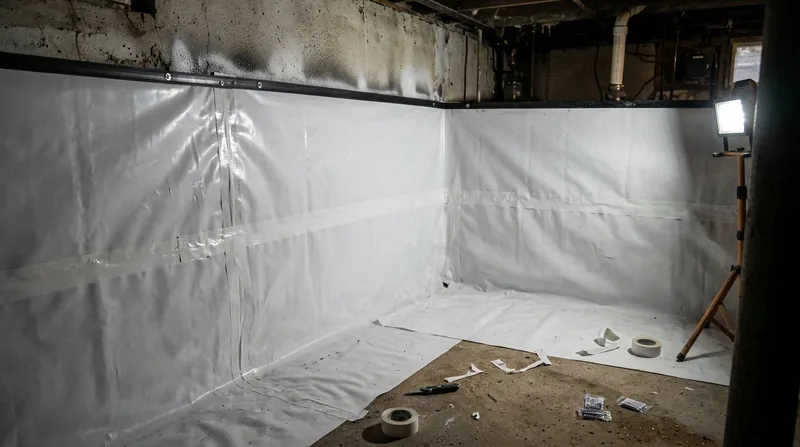




Vapor Barrier Installation in Arlington Heights: Sealing Out Ground Moisture at the Source
Arlington Heights sits on flat glacial clay till northwest of Chicago, ground that drains slowly and holds the water table high in the old prairie and wetland pockets near Weller Creek and McDonald Creek. That means the damp you smell in a Scarsdale bungalow basement or see weeping through the block walls of a 1950s brick ranch is usually vapor, not a visible leak. Vapor Barrier Installation in Arlington Heights puts a heavy-duty membrane over the wall and slab to stop that ground moisture from rising into the lower level. We install sealed sheets, taped terminations, and sump integration where the floor needs it. This is dedicated below-grade work, not general handyman sealing. If you are chasing a wet basement, start with our basement waterproofing service and we will tell you honestly whether a barrier alone solves it.
Why Vapor Barriers Matter in Arlington Heights Clay and Old Block Foundations
Most Arlington Heights homes were built before anyone thought about slab moisture. The 1890s to 1920s foursquares and Prairie-style houses near downtown sit on brick and block foundations with no modern membrane. The 1920s to 1940s Tudors and bungalows in the Arlington Park area have full basements poured or blocked straight against clay. In all of them, moisture vapor moves from wet soil through the masonry and slab and condenses on cool surfaces, which is why you get efflorescence, a musty basement smell, and peeling floor paint even when no water pools.
- Glacial clay soil holds spring rain and snowmelt against the foundation for weeks, feeding constant vapor drive.
- Unsealed block walls wick groundwater upward and release it into the basement air.
- Bare concrete slabs pass vapor into finished rooms and stored goods.
- Freeze-thaw cycles open hairline cracks that let more moisture through each winter.
A properly installed barrier closes those paths, and it works best when paired with drainage that keeps bulk water away from the wall in the first place.
Key info: In a 1920s bungalow off Arlington Heights Road, the block wall read damp year-round with white efflorescence and no standing water. The fix was a sealed wall barrier tied into the existing footing drain, not exterior excavation. That is the pattern we see across the older blocks here.
For local code questions on drainage alterations, check the Village of Arlington Heights building department before work begins: Village of Arlington Heights.
How We Install Vapor Barriers in Arlington Heights Basements
We do not staple plastic to a wall and call it done. The job starts with a free basement inspection to find where the moisture is actually coming from: wall seepage, slab vapor, a failing drain tile, or a sump that quits during a storm. Then we build the barrier to fit the foundation we find, whether it is a poured 1980s Colonial in Buffalo Grove or a block basement in Mount Prospect.
- We inspect the walls, slab, footing drain, and sump basin to locate the moisture source.
- We grind and patch rough spots and fill cracks before any sheet goes up.
- We hang heavy-duty barrier sheets with sealed seams and taped terminations at the floor and rim.
- We integrate the barrier with the sump basin and discharge line where the slab needs protection.
- We test the assembly and walk you through what to watch for after heavy rain.
Every installation ends with a clear explanation of how the barrier ties into your drainage, so you know what is protecting the wall and what still needs attention.
Key info: A split-level in Palatine had a damp slab and a musty smell after every spring storm, but dry walls. We installed a slab barrier with sealed seams tied to a new sump basin, and the moisture readings dropped within a week. No wall excavation was needed.
If the inspection shows the footing drain is failing, we move to interior drain tile before the barrier goes in, because a membrane over a wet floor just traps the problem.
Vapor Barrier Approaches We Use in Arlington Heights
Not every basement needs the same membrane. We match the approach to the foundation type, the moisture reading, and how the space is used, from a bare storage basement in Des Plaines to a finished lower level in Schaumburg.
| Approach | Description | Best for |
|---|---|---|
| Wall vapor barrier | Heavy-duty sheet over block or poured walls with sealed seams and taped top and bottom terminations. | Damp walls with efflorescence but no active seepage. |
| Slab vapor barrier | Membrane laid over the concrete floor, sealed at the perimeter and integrated with the sump basin. | Musty smell and damp floors in finished or storage basements. |
| Full perimeter barrier | Wall and slab sheets joined into one continuous sealed assembly around the basement. | Older brick and block foundations with moisture on both surfaces. |
| Barrier with drainage integration | Vapor barrier tied into interior perimeter drain and sump where hydrostatic pressure is present. | Wet basements where water, not just vapor, is the issue. |
The right row in that table depends on what the inspection finds, and we will tell you plainly when a simpler wall barrier is enough.
Vapor Barrier Installation Cost in Arlington Heights: What to Expect
Most homeowners want a number before they commit, so here is the honest shape of it. Vapor barrier work starts From $3/sq ft, and that figure covers the membrane, sealed seams, and basic terminations. The final price moves with the square footage of wall and floor, the condition of the surface, and whether the job needs sump integration or crack repair first. A small slab barrier in a Mount Prospect ranch sits at the low end. A full perimeter barrier in a 1920s foursquare near downtown, with rough block walls and a failing drain tile, lands higher.
Get two or three written estimates and compare scope, not just the bottom line. Ask whether the price includes surface prep, seam sealing, and disposal, and whether the contractor will test the assembly afterward. Our full pricing overview breaks down what each tier includes so you can compare apples to apples.
What to Look for in a Waterproofing Contractor Near Arlington Heights
Hiring for below-grade work is different from hiring a painter. The contractor needs to read moisture, understand footing drains, and know when a barrier is the wrong answer. Use this checklist before you sign anything.
- Confirm the company is licensed and insured, and ask for a certificate of insurance before work starts.
- Get at least two written estimates with the same scope, so you can compare fairly.
- Ask for references from Arlington Heights or nearby towns and call them.
- Ask who pulls any permit required for drainage or sump discharge changes, and verify with the local building department.
- Check HOA rules if you live in a planned community, since exterior discharge changes may need approval.
We are a Basement Health Association member and we will tell you when a barrier is not the fix. Reach us through the contact page to set up a free inspection.
Vapor Barrier Installation in Arlington Heights: Pricing Guide
| Service | Price | Details |
|---|---|---|
| Wall vapor barrier | Starting at $3/sq ft | Includes heavy-duty sheet, sealed seams, and taped terminations on block or poured walls. |
| Slab vapor barrier | Starting at $3/sq ft | Includes membrane over concrete, perimeter sealing, and sump basin integration where needed. |
| Full perimeter barrier | From $3/sq ft | Includes wall and slab sheets joined into one continuous sealed assembly around the basement. |
| Barrier with drainage integration | On estimate | Needs an on-site look because interior drain tile and sump work must be scoped first. |
| Travel | Included | In Arlington Heights and surrounding areas, no separate call-out or mileage fee. |
| Estimate | Free | Response within 24h at (224) 427-5558, no obligation to book. |
Indicative pricing, the exact cost depends on square footage, finish, and site access. Free personalized estimate within 24h at (224) 427-5558.


