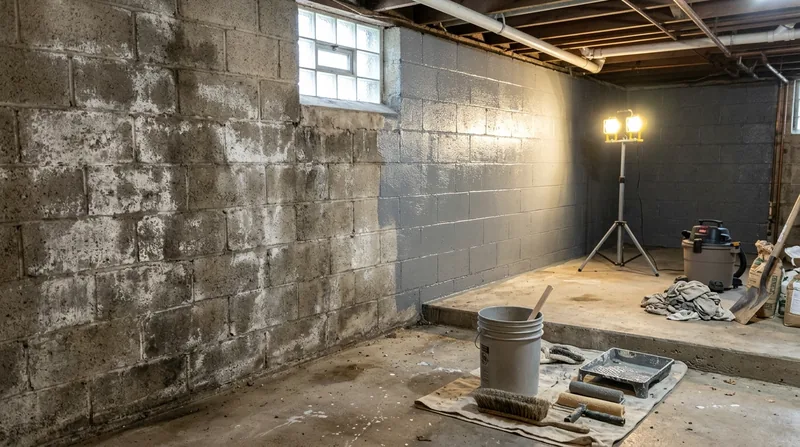




Basement Wall Sealing in Arlington Heights: Stop the Seep Before It Spreads
Arlington Heights sits on flat glacial clay till northwest of Chicago, and that dense soil drains slowly. The old railroad villages near downtown, the brick and block foundations of 1890s-1920s Victorians, the full basements under Scarsdale and Arlington Park bungalows, and the poured-concrete basements in Buffalo Grove and Schaumburg all face the same spring reality: a high water table and heavy rain push moisture straight through the wall. Basement Wall Sealing in Arlington Heights is the first line of defense when you see damp patches, white powder on the block, or a musty smell after a storm. We prep the surface, remove efflorescence, and apply the right penetrating or membrane sealer for your wall type. Call (224) 427-5558 to schedule a free basement inspection. For broader moisture control, see our basement waterproofing service.
Why Wall Sealing Matters on Arlington Heights' Clay and Block Foundations
Most Arlington Heights homes were built before modern drainage was standard, and the clay soil holds water against the foundation for days after a storm. When hydrostatic pressure builds, water finds the path of least resistance: mortar joints, tie holes, and hairline cracks. Sealing alone will not stop a wall that is actively leaking under pressure, but it is the right fix for surface dampness, efflorescence, and minor seepage. We tell you honestly which problem you have.
- Efflorescence (the white salt powder) means moisture is moving through the masonry and evaporating on the surface.
- Damp walls and a musty smell after rain point to capillary action through block or brick, not a structural crack.
- Peeling paint and crumbling parging on older Scarsdale bungalows usually trace back to surface moisture, not a failing footing.
- Persistent water at the wall base after a storm signals hydrostatic pressure, which needs drainage, not just a sealer.
If you see any of these signs, a free inspection tells you whether sealing is enough or whether the wall needs more.
Key info: A 1920s foursquare near downtown Arlington Heights with efflorescence on a block wall is a textbook sealing candidate. A 1960s Mount Prospect ranch with water running across the floor after every storm is not. The difference is pressure versus surface moisture, and we check for it before quoting.
For local code and permit questions on foundation and drainage work, start with the Village of Arlington Heights building department, since rules vary and must be verified for your address.
How We Seal Basement Walls in Arlington Heights, Step by Step
We do not spray sealer over a dirty or wet wall and call it done. Surface prep is where most failed sealing jobs went wrong, especially on old block foundations that have been painted or patched over the years. Here is the sequence we follow on a typical Arlington Heights basement.
- We inspect the wall for cracks, bowing, and active seepage, and we check the footing drain and sump condition.
- We remove efflorescence, loose parging, and failing paint so the sealer bonds to sound masonry.
- We fill cracks and tie holes with hydraulic cement or epoxy injection where the crack is structural.
- We apply a penetrating sealer on block and brick, or a membrane sealer on poured concrete, depending on the wall.
- We check grading and downspout extensions outside, because sealing a wall while roof water still dumps at the foundation is wasted effort.
Every job ends with a walkthrough so you know what was sealed, what was left alone, and what to watch for next spring.
Local example: On a 1950s brick ranch in the Arlington Park area, the wall showed heavy efflorescence but no active leaking. We removed the salt bloom, applied a breathable penetrating sealer, and extended two downspouts. The wall stayed dry through the next spring melt. A different home in Palatine with water at the cove base needed an interior drain tile system, not sealer, and we said so.
Sealing Methods We Use and When Each One Fits
Not every wall takes the same product. Block walls breathe differently than poured concrete, and a wall with active pressure needs a different answer than a damp wall with no standing water. This table shows how we match the method to the condition.
| Approach | Description | Best for |
|---|---|---|
| Penetrating sealer | Soaks into block and brick pores and blocks capillary moisture without trapping vapor. | Damp block walls with efflorescence and no standing water. |
| Membrane sealer | Builds a flexible coating on the wall face to shed minor seepage. | Poured concrete walls with hairline seepage and no hydrostatic pressure. |
| Crack injection plus sealer | Epoxy or polyurethane injection ports close the crack, then sealer treats the field. | Walls with a defined vertical or stair-step crack that seeps after rain. |
| Drainage-first assessment | We test for pressure and recommend interior or exterior drainage instead of sealer. | Walls with water at the base, wet floors, or repeated sump pump runs. |
If the assessment points to drainage, we refer you to the right system rather than sell you a sealer that will fail by July.
Basement Wall Sealing Cost in Arlington Heights: What to Expect
Most residential wall sealing jobs in Arlington Heights start around $1,500, and the final number depends on wall length, wall type, and how much prep the surface needs. A small poured-concrete wall with light dampness sits at the low end. A long block wall with heavy efflorescence, failing paint, and a few cracks to inject moves up from there. We quote after we see the wall, not over the phone.
Getting two or three estimates is smart, and not just on price. Ask each contractor whether they checked for hydrostatic pressure, whether they will extend downspouts, and what happens if the wall still seeps. A cheap sealer sprayed on a wet wall is the most expensive job you can buy, because you pay twice. Our pricing page lays out the ranges in more detail.
Basement Wall Sealing Near Me: How to Choose a Contractor Near Arlington Heights
You want a specialist who works below grade every week, not a general handyman with a sprayer. Ask for proof of licensing and insurance, and get a certificate of insurance sent to you before work starts. Check references from homeowners in Arlington Heights, Mount Prospect, or Palatine with the same wall type and age as yours. Confirm who pulls any permit the local building department requires for structural crack repair or drainage changes, and check any HOA rules on exterior work and discharge locations. When you are ready, contact us for a free, no-obligation estimate at (224) 427-5558.
Basement Wall Sealing in Arlington Heights: Pricing Guide
| Service | Price | Details |
|---|---|---|
| Single wall sealing, poured concrete | Starting at $1,500 | Includes surface prep, efflorescence removal, and one membrane or penetrating coat on a standard wall run. |
| Full basement block wall sealing | Starting at $2,400 | Covers all four walls with penetrating sealer, plus crack and tie-hole filling where needed. |
| Sealing with crack injection | Starting at $1,900 | Adds epoxy or polyurethane injection ports for one active crack before the sealer is applied. |
| Complex or large-scale job | On estimate | Long wall runs, heavy parging repair, or suspected hydrostatic pressure need an on-site look first. |
| Travel | Included | In Arlington Heights and surrounding areas, no separate call-out or mileage fee. |
| Estimate | Free | Response within 24h at (224) 427-5558, no obligation to book. |
Indicative pricing, the exact cost depends on square footage, finish, and site access. Free personalized estimate within 24h at (224) 427-5558.


