The Geology Under Your Feet: Arlington Heights Clay Soil Explained
If you live in Arlington Heights, you already know that the northwest suburbs have a character all their own. What you may not realize is that the same flat, green landscape that makes this area so appealing is also the root cause of many basement water problems. The soil beneath most of Arlington Heights is heavy clay, left behind by glaciers thousands of years ago. Unlike sandy or loamy soils that let water pass through quickly, clay is dense and sticky. When it rains, clay absorbs water slowly, then holds onto it like a sponge. That means water lingers around your foundation far longer than it would in other parts of the country.
This is the first piece of the puzzle for anyone researching Arlington Heights clay soil and its effects on homes. Clay also expands when wet and shrinks when dry, a process known as swelling and shrinking. Over the years, this cycle puts constant pressure on foundation walls and can open tiny cracks that let water seep in. Homeowners in Palatine and Mount Prospect face the same geology, which is why basement leaks are so common across this part of Cook County.
Why a High Water Table Makes Basement Seepage Worse
Clay soil is only half the story. The other half is the high water table basement problem that affects much of the northwest suburbs. Because clay drains so slowly, water that falls on the surface does not always soak deep into the ground. Instead, it collects in the upper layers of soil and raises the water table closer to the surface. When the water table rises above the level of your basement floor, water pressure builds against the outside of your foundation. That pressure, called hydrostatic pressure, is relentless. It pushes water through even the smallest hairline cracks, through mortar joints, and through the porous concrete itself.
This is why some Arlington Heights homeowners see water in the basement after every heavy rain, even when there is no obvious crack or gap. The water is not coming from a single failure point. It is being pushed in from all sides by saturated soil. Understanding this is key to choosing the right fix. A patch on the inside of a wall will not stop hydrostatic pressure from the outside. Real solutions have to manage the water before it reaches your foundation, or relieve the pressure once it does. That is where a proper Basement Waterproofing strategy comes in.
Cook County Basement Leaks: What Homeowners Actually See
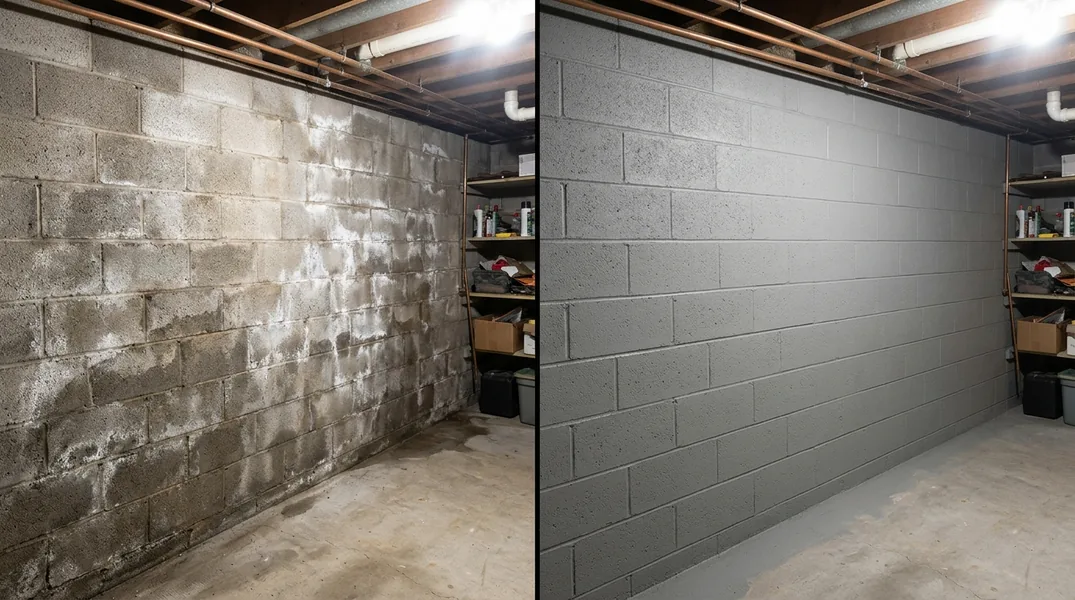
When we talk with homeowners about Cook County basement leaks, the stories are remarkably similar. Water appears along the base of the wall after a storm. The floor feels damp near the perimeter. White powdery stains (efflorescence) show up on the concrete. In worse cases, carpet squares are soaked, boxes are ruined, and a musty smell lingers for days. These are classic signs of clay soil foundation seepage, and they tend to get worse over time rather than better. Each wet season widens existing cracks and softens the soil around the foundation, which increases the pressure for the next storm.
The good news is that these symptoms are well understood, and there are proven ways to address them. The right approach depends on your specific situation: how your home was built, how the grading around it looks, and how the water table behaves on your block. A one-size-fits-all fix rarely works. That is why a professional assessment matters. If you are seeing any of these signs, it is worth scheduling a free estimate so you can understand exactly what is happening under your home before the next big rain.
Soil Drainage and Grading: Small Fixes That Make a Big Difference
Before anyone talks about major repairs, it is worth looking at soil drainage around your home. In many Arlington Heights neighborhoods, the original grading has settled over the decades. Soil that once sloped away from the house may now slope toward it, sending rainwater directly into the foundation zone. Downspouts that discharge too close to the wall add to the problem. Simply extending downspouts several feet away and regrading the soil so it slopes away from the foundation can reduce the amount of water reaching your basement by a surprising amount. These are low-cost steps any homeowner can take, and they are often the first line of defense.
That said, grading alone cannot fix a high water table or saturated clay. If the soil around your home is already holding water like a bathtub, surface fixes will only go so far. In those cases, more robust solutions are needed. An Interior Drain Tile System can capture water that reaches the base of the foundation and route it to a sump pump, while Exterior Basement Waterproofing addresses the problem from the outside by improving drainage and sealing the foundation wall. Many homes benefit from a combination of both, depending on the severity of the issue.
Foundation Waterproofing Near Me: Choosing the Right Approach
Searching for foundation waterproofing near me in the northwest suburbs will turn up plenty of options, and it can be hard to tell them apart. The key is to find a contractor who understands local soil conditions and takes the time to diagnose the actual cause of your leak rather than selling a single solution to every homeowner. A proper evaluation should include looking at the exterior grading, checking for cracks and efflorescence, and asking about when and how water appears. From there, a tailored plan makes sense. Sometimes Foundation Waterproofing is about sealing and crack repair. Other times it is about managing water with drain tile and a sump system.
It also helps to ask about pricing up front and to get a clear written scope of work. A reputable contractor will explain what is being done, why, and what kind of warranty backs it. Homeowners in Buffalo Grove and across the area deserve straight answers, and that is what a good local company should provide. If you want to talk through your situation, call Arlington Heights Waterproofing at (224) 427-5558. We serve Arlington Heights and the surrounding communities and are happy to help you understand your options.
When to Call a Professional for Your Wet Basement
Some homeowners wait until they have standing water before they call anyone. That is understandable, but it is usually more expensive in the long run. If you notice damp walls, a musty odor, or water stains that appear after every storm, those are early warnings. Addressing them sooner rather than later can prevent mold growth, protect finished basement spaces, and avoid structural damage to your foundation. The clay soil and high water table in this region are not going away, so a proactive approach is the smart one.
If you are ready to stop guessing and get a real answer, reach out to Arlington Heights Waterproofing. We know this area, we know its soil, and we know what works. You can request a free estimate online or call (224) 427-5558 to speak with someone directly. A dry basement is not a luxury in this part of Illinois. It is a necessity, and it is achievable with the right plan.
Looking for a professional basement waterproofing contractor in Arlington Heights? Arlington Heights Waterproofing responds fast for all your basement waterproofing needs.
Get a Free QuoteOur services: Basement Waterproofing · Interior Drain Tile System · Exterior Basement Waterproofing